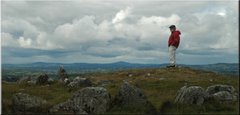
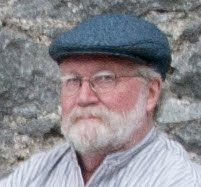
“HEY now, Popsie! Bet I could do that!” Douglas M. and Sherwood Harrington, January, 1967. Photo by Lynn Harrington.
Doug left us four years ago today. Between the above photo and then, he actually did manage to learn to play the guitar.
“HEY now, Popsie! Bet I could do that!” Douglas M. and Sherwood Harrington, January, 1967. Photo by Lynn Harrington.
Doug left us four years ago today. Between the above photo and then, he actually did manage to learn to play the guitar.
When we visited Birr Castle Demesne the first time, in 2006, I was fascinated by the carefully-collected and maintained forest of the place, the product of multiple generations’ passion for and expertise in dendrology. Among the thousands of trees cared for by the current Lord Rosse on this 135 acre estate is a group which compose the “Red Tree Trail,” four dozen specimens of great interest (for a variety of reasons). The trail itself winds through almost all of the Demesne, and following it is a good way for a visitor to become familiar with many of the nooks and byways of this marvel of private forests, gardens, and meadows.
A copy of the little guide book for the trail, Fifty Trees of Distinction, is available to tenants of the cottage we stayed in then (and again this year) and copies can be bought at the Demesne’s Science Centre; the Bothy copy is pictured here by the four-century old “Carroll Oak” midway through the trail. (Two trees of the trail have died since 2006, hence the difference between the booklet’s title and my “four dozen.”) The booklet gives great descriptions of each tree along the way, including scientifically-noteworthy aspects of the species or the specimen or both – but it lacks pictures.
We of course bought our own copy of the booklet to take home with us, but the lack of illustrations bothered me. I set out to fix that for us, personally, by recording as many of the 50 as I could in photographs so we could look back at them at leisure when thumbing through the booklet at home. The project was a very nice exercise for me in 2006, introducing me to parts of the Demesne’s parkland that I might not otherwise have seen.
The effort was a great success. I managed to document at least three images of each specimen: one full-tree, one bark detail, and one leaf detail. Those images were put on the web as The Red Tree Trail on our personal website, and they’ve evidently been of use to more people than just Diane and me. According to Google Analytics, the title page alone has been accessed more than 5,000 times by people in 103 countries (which is probably pretty much all of them), and individual trees’ pages much more than that due to searches for images of individual species.
When we arrived this past August for our second stay in the Demesne, I had no particular such project in mind – until the first time I sat on a bench near the Bothy, enjoying the view and thinking about some of the requests for photos that I had solicited from readers earlier this year. Particularly, I was thinking about my friend Margaret Ryall, who stayed in the Bothy in 2008.
Margaret, a very fine artist and educator in St. Johns, Newfoundland, produced a wonderful suite of works based on her experiences in Birr called “Reading a Garden.” When I asked her if there were any photos she wanted me to take this year, her reply was that I should take a “Margaret picture,” which she couldn’t specify ahead of time, but she was sure I’d recognize when I saw it.
I did. And it wasn’t just one picture, it was a whole series.
Many of her works based on her stay in the Demesne focused on its benches, and the sights both large- and small-scale a patient viewer could see from them. So, I thought on my bench in early August, what better “Margaret picture” than views from the benches themselves?
So I set out on a gentler project in 2010 than 2006’s Red Tree Trail: one in which I’d produce for a number of benches not only the view (in large-scale, panoramic form), but also a context-establishing shot of the bench itself and a detail from the view that especially captured my interest for one reason or another.
Detail from Bench #5.
The result is a set of web pages that requires a bit more participation from the viewer than Red Tree Trail does. The panoramas that make up the heart of the project are very large files that the viewer needs to download. The panorama files are in a format that is designed to fill typical monitors’ screens top-to-bottom (or nearly so), spilling well offscreen to left and right. Then, panning left and right will give the viewer a little better sense of “being there” than a single, static snapshot can do.
Please come and sit a spell once in a while with me on the benches of Birr Castle Demesne. The views are not intended to be seen all in one sitting; come back once in a while during your long winter and sit on a new bench and take in its fresh perspective from an Irish summer. And, if you really need transporting, a good soundtrack is provided by The Gardens of Birr Castle Demesne by Karin Leitner and Duccio Lombardi on flute and harp.
Here’s the link:
Birr Castle Demesne: Views from the Benches
Enjoy!
(And thank you, Margaret.)
 She is older now. Her black fur has faded in places, revealing its underlying red. She has a few notches in her ears that she didn't have four years ago. Her trust is not so simple as it was, and not so surrounding as before.
 The Muniment Room of the Birr Castle Archives, August, 2010. This was my "office" while researching connections between the 19th Century Parsons family and America. (90-degree panorama of several handheld vertical frames -- should be clicked on and viewed large.)
  Laurence Parsons, Fourth Earl of Rosse, as a Young Man (photo from the Birr Castle Archives)
 The Fourth Earl inspects a 36-inch telescope at his observatory, late 1800s. This particular telescope no longer exists, but the walls in the background -- support structure for the giant "Leviathan of Parsonstown" -- still do. Between them now is a reconstruction of that revolutionary instrument, designed and built by the Fourth Earl's father. (Photo from Ireland's Historic Science Centre, Birr Castle Demesne.)
  One of the Fourth Earl's travel diaries in the Birr Castle Archives, 2010.
  Sherwood peruses the archives, Birr Castle, 2010. The white cotton gloves are to protect the old paper from skin oils and acids.
  A pair of pages from the Fourth Earl of Rosse's travel diary, 1891.
  Lick Observatory at the summit of Mt. Hamilton, California, September 2008. The great 36" refractor still occupies the big dome; the Ft. Harrington pickup truck squats near the entrance.
 "Big Trees and Roaring Camp Railroad," 2005. My late son, Doug Harrington, holds his daughter, Grace, on his shoulder in front of a narrow-guage locomotive that may well have been operating when Laurence Parsons, Fourth Earl of Rosse, visited this place in 1891.
 Kelsey in heaven. Or Henry Cowell State Park. To him, there's no difference.
  In what is now Henry Cowell State Park, California, 1891.
  Sherwood photographing a photograph album from a trip by an astronomer of bygone days to his own present home. The multiple layers of self-referencing in this image make me dizzy.
  View northward from the Seaview B&B, Friday, 13 August, 2010.
 Heading out of Antrim: serene farmland on a Saturday morning.
 At the Bernish viewpoint, just north of the border along the A1 motorway. Why the crutches are not attached to a human, and why the human is not in the picture in this isolated spot, will be left to the speculation of the viewer.
 Suspension bridge over the Boyne on the Republic's M1 motorway.
 Emergency department, Tullamore Regional Hospital, Co. Offaly, 14 August 2010.
 "Home," inside the Bothy, 2010.
 Nymansay eucryphia near the Bothy on the Evening of Great Relief.
 Killeineagh denizen
 Church at Clonfinlough
 Last photo from Thursday, August 12 -- probably taken at just about the instant of the "thud" of the title.
 Casting a pall on our prospects.
 180-degree Panorama at the Giant's Causeway, County Antrim. Please click on any image -- but especially this one -- to see it in a larger size.
 Diane (in yellow) navigates the Causeway.
 At the Giant's Causeway on a blustery August morning.
 Part of Dunluce Castle's ruins.
 Sherwood at a Dunluce picture window.
 Along the north Antrim coast.
 The stile.
 Uh-oh.
 Regular readers might understand why we're using some of the only few hours of internet time we've had for a week (or will have for at least one more) to post just this silly picture of a cat. Others will have to go back in time four years.
 Notice the very top: "This is just a signpost. If you want information, go somewhere else." (Photo copyright by Tina Manthorpe, all rights reserved.)
 This is where we're going to go. Maybe. We think. Or maybe not.
 2006: Actual peregrinations. I wish we had made a "planning" map for that trip; it would have been quite different from the actuality shown above. (Click to see a legible version.)